hpdsigns.nyc
NYC Street Number Requirements – HPD § 27-2049 Building Address Law (pdf file, 2026)

- SKU:
- NYC Street Number Requirements – HPD § 27-2049 Building Address Law (pdf file, 2026)
- MPN:
- 25 NYC Housing Maintenance Code Safety


Description
New York City Housing Maintenance Code § 27-2049 requires the owner of a dwelling to post and maintain the building's street number so that it is plainly visible from the sidewalk in front of the property.
The purpose of this requirement is to make sure that buildings can be quickly and accurately identified by emergency responders, City inspectors, residents, visitors, utility workers, and others approaching the property.
What NYC Housing Maintenance Code § 27-2049 Requires
Property owners are responsible for:
- Posting the correct street number on the building.
- Keeping the street number properly maintained.
- Making sure the number is plainly visible from the sidewalk.
- Replacing numbers that become missing, damaged, faded, painted over, or otherwise difficult to read.
- Making sure the street number complies with applicable NYC requirements concerning its size, location, visibility, and display.
Section § 27-2049 works together with NYC Administrative Code § 3-505, which establishes additional requirements for displaying street numbers.
Why Does NYC Require Street Numbers?
Street numbers are an important part of building identification and public safety.
During an emergency, FDNY firefighters, EMS personnel, and NYPD officers must be able to quickly identify the correct building. A missing, hidden, or difficult-to-read street number can delay responders when responding to a fire, medical emergency, gas leak, carbon monoxide condition, or other dangerous situation.
Clearly displayed street numbers also assist:
- FDNY and EMS emergency responders
- NYPD
- HPD inspectors
- DOB inspectors
- Utility and service personnel
- Tenants and visitors
- Delivery personnel
The basic principle is simple: a person approaching the property from the public street or sidewalk should be able to readily identify the building.
Street Number Size and Visibility
NYC requirements should be considered together rather than relying solely on Housing Maintenance Code § 27-2049.
Under applicable NYC Building Code and Fire Code address-identification provisions, street address characters are generally required to:
- Be at least 4 inches high
- Have a minimum 1/2-inch stroke width
- Contrast with the background on which they are mounted
- Be installed in a location where they are plainly visible from the street or other required frontage
Applicable borough rules and specific building conditions may impose additional or different requirements.
A street number should therefore not simply exist somewhere on the building. It should be clearly readable and readily identifiable from the public way.
Owners Must Maintain the Street Number
The language of § 27-2049 requires an owner to “post and maintain” the street number.
This creates an ongoing responsibility.
A street number that was originally installed correctly may become noncompliant if it is:
- Missing
- Broken or damaged
- Faded
- Painted over
- Obscured by construction or scaffolding
- Hidden behind vegetation or another object
- Difficult to distinguish from its background
- No longer plainly visible from the sidewalk
Property owners should periodically inspect their building identification to make sure it remains clearly visible.
Corner Buildings and Buildings With Multiple Entrances
Special attention should be given to buildings located on corners or buildings that have entrances facing more than one street.
NYC Administrative Code § 3-505 contains requirements addressing street-number identification on sides of buildings containing entrances primarily used for normal pedestrian ingress and egress.
The objective is to prevent confusion when emergency responders or other persons approach a building from a street different from the building's primary address.
NYC Laws That May Apply to Building Street Numbers
Several NYC Code provisions work together regarding building identification:
NYC Housing Maintenance Code § 27-2049
Requires dwelling owners to post and maintain street numbers that are plainly visible from the sidewalk.
NYC Administrative Code § 3-505
Contains citywide requirements concerning street-number display and enforcement.
NYC Building Code § 501.2
Contains technical requirements for address identification, including general standards concerning character size, stroke width, contrast, and visibility.
NYC Fire Code § 505.1
Requires address/building identification to be plainly discernible from the public street or required frontage and establishes additional address-identification standards.
Applicable borough rules should also be reviewed because they may establish additional requirements concerning the size, form, location, and visibility of street numbers.
Why Compliance Matters
Proper street-number identification is more than an appearance issue. It is an important building-identification and life-safety requirement.
Clear building identification can help emergency responders locate the correct property without unnecessary delay and helps NYC agencies properly identify buildings during inspections and enforcement activities.
For NYC property owners and managers, the safest practice is to maintain street numbers that are:
Correct • Large Enough • High Contrast • Unobstructed • Clearly Visible From the Street or Sidewalk
Property Owner Compliance Checklist
Before considering your building street-number identification complete, verify that:
✓ The correct street number is displayed.
✓ The number is plainly visible from the sidewalk or required public frontage.
✓ Characters meet applicable size requirements.
✓ Numbers contrast clearly with their background.
✓ The number is not blocked by signs, awnings, vegetation, scaffolding, or other objects.
✓ Numbers are not faded, damaged, missing, or painted over.
✓ Corner buildings and buildings with multiple entrances have been reviewed for additional address-display requirements.
✓ The street number remains visible during both normal daytime and nighttime conditions.
NYC Administrative Code § 3-505 – Street Number Requirements
New York City Administrative Code § 3-505 requires buildings to properly display their assigned street numbers so that the address is plainly legible from the sidewalk.
What Does NYC Administrative Code § 3-505 Require?
The owner, agent, lessee, or other person in charge of a building is responsible for displaying the proper street number assigned to the property.
The street number must be displayed so that it is plainly legible from the sidewalk in front of the building at all times.
For purposes of this requirement, the “front” of the building generally means the side facing the street to which the building’s street number has been assigned. The street number must be displayed on that side of the building or premises.
Each NYC borough president may establish and enforce additional rules concerning the size, form, visibility, and location of street numbers.
Street Number Compliance Requirements
NYC property owners and other responsible parties should make sure that:
- The correct assigned street number is displayed.
- The number is located on the appropriate side of the building or premises.
- The street number is plainly legible from the sidewalk.
- The number remains visible and legible at all times.
- The number is not hidden or obstructed.
- The street number complies with applicable requirements concerning size, form, visibility, and location.
- Missing, damaged, faded, covered, or illegible numbers are replaced or corrected.
Corner Buildings and Buildings With Multiple Street Frontages
NYC Administrative Code § 3-505 contains additional requirements for buildings that have frontage on more than one street.
When a side of a building has an entrance that is primarily used for normal day-to-day pedestrian entry and exit, that side must display appropriate street-address identification.
The building must display either:
- The assigned street number for the street that the entrance faces; OR
- Both the street name and assigned street number associated with another street-facing entrance that is primarily used for day-to-day pedestrian ingress and egress.
This requirement is particularly important for corner buildings and other properties with entrances facing different streets.
Who Is Responsible for Compliance?
NYC Administrative Code § 3-505 may place responsibility on the:
- Building owner
- Agent
- Lessee
- Other person in charge of the building
Property owners and managers should therefore make sure that required street numbers remain properly displayed and legible.
Why Are Street Numbers Required?
Clearly displayed street numbers are an important part of building identification and public safety.
Proper address identification helps emergency responders and other personnel quickly locate the correct property, including:
- FDNY firefighters
- EMS personnel
- NYPD
- HPD inspectors
- DOB inspectors
- Utility and service personnel
- Residents and visitors
- Delivery personnel
A building number that is missing, difficult to read, incorrectly positioned, or obstructed can make it more difficult to quickly identify the correct property.
Violations and Penalties
If a responsible party fails to properly display the required street number, the applicable borough president may serve notice of the requirements.
Under NYC Administrative Code § 3-505, if the owner, lessee, agent, or other person in charge fails to comply after 30 days’ notice, the responsible party may be subject to a penalty of:
$250 for failure to comply
If the violation continues:
An additional $50 may be imposed for each day the offense continues.
Because continuing violations can result in additional penalties, property owners should correct missing or noncompliant street-number identification promptly.
Landlord Street Number Checklist
Use this checklist when reviewing your property:
✓ Correct assigned street number is displayed.
✓ Street number is plainly legible from the sidewalk.
✓ Number is displayed on the proper street-facing side of the building or premises.
✓ Numbers remain clearly visible at all times.
✓ Numbers are not faded, damaged, missing, or painted over.
✓ Numbers are not obstructed by signs, awnings, scaffolding, vegetation, or other objects.
✓ Applicable requirements concerning number size, form, visibility, and location have been reviewed.
✓ Corner buildings and buildings with multiple street-facing entrances have been reviewed for additional address-display requirements.
Related NYC Street Number Requirement – Housing Maintenance Code § 27-2049
For NYC dwellings, Housing Maintenance Code § 27-2049 also requires the owner to post and maintain street numbers on the dwelling that are plainly visible from the sidewalk in front of the property.
Therefore, NYC dwelling owners should review § 3-505 together with Housing Maintenance Code § 27-2049 and other applicable NYC Building Code, Fire Code, and borough requirements.
Important Reminder for NYC Property Owners
The basic compliance principle is:
DISPLAY THE CORRECT STREET NUMBER WHERE IT IS PLAINLY LEGIBLE FROM THE SIDEWALK AND KEEP IT VISIBLE AND PROPERLY MAINTAINED AT ALL TIMES.
Legal References
NYC Administrative Code § 3-505 – Street Numbers
NYC Housing Maintenance Code § 27-2049 – Street Numbers
Provided by HPDSigns.NYC
LEGAL DISCLAIMER, LIMITATION OF LIABILITY, AND TERMS OF USE
INDEPENDENT SMALL FAMILY-OWNED BUSINESS NOTICE
We are an independent privately owned small family-owned business operating in the United States.
We are NOT the City of New York, HPD, DOB, FDNY, DSNY, DEP, DOT, DHCR, HUD, OSHA, EPA, FEMA, any state agency, any federal agency, or any governmental, quasi-governmental, regulatory, enforcement, housing, building, fire, transportation, sanitation, environmental, health, public safety, or public authority organization.
We are not affiliated with, endorsed by, approved by, sponsored by, authorized by, certified by, partnered with, or connected in any manner with any governmental agency or authority.
Any references to governmental agencies, laws, regulations, codes, standards, ordinances, inspections, notices, permits, requirements, compliance programs, enforcement actions, or public resources are provided solely for informational and descriptive purposes and do not imply endorsement, approval, certification, sponsorship, authorization, partnership, or affiliation.
Many governmental publications, flyers, brochures, forms, notices, checklists, and educational materials referenced, reproduced, summarized, attached, linked, or distributed by our company are publicly available documents that may be obtained directly from the applicable government agency, often at no charge.
INFORMATIONAL PURPOSES ONLY
All content, products, services, signs, sign packages, notices, brochures, flyers, downloadable files, PDF documents, checklists, product descriptions, blog articles, compliance guides, customer communications, emails, specifications, marketing materials, and related information are provided solely for general informational and educational purposes.
Information may become outdated, amended, revised, superseded, interpreted differently, or withdrawn without notice.
Laws, regulations, building codes, fire codes, housing requirements, inspection procedures, accessibility requirements, environmental regulations, insurance requirements, safety standards, and governmental policies frequently change and may vary by jurisdiction, occupancy type, building classification, property use, location, agency interpretation, and individual circumstances.
We make no representation, warranty, or guarantee that any information provided is accurate, complete, current, reliable, applicable, legally sufficient, or appropriate for any specific situation.
Users assume all risk associated with reliance upon any information provided.
NO PROFESSIONAL ADVICE
Nothing provided by our company shall be construed as:
• Legal advice
• Engineering advice
• Architectural advice
• Fire protection advice
• Life safety advice
• Accessibility advice
• ADA compliance advice
• Building code advice
• Fire code advice
• Housing code advice
• Inspection advice
• Regulatory advice
• Tax advice
• Insurance advice
• Real estate advice
• Environmental advice
• Construction advice
• Property management advice
• Professional consulting services of any kind
No attorney-client, consultant-client, architect-client, engineer-client, contractor-client, professional-client, or fiduciary relationship is created through the use of our website, purchase of products, receipt of materials, or communication with our company.
Customers should consult qualified attorneys, architects, engineers, code consultants, licensed contractors, fire protection professionals, insurance professionals, accountants, and applicable governmental authorities regarding their specific circumstances.
GOVERNMENT PUBLICATION DISCLAIMER
Any government-related document, brochure, flyer, checklist, guide, notice, publication, form, or educational material distributed by our company is provided solely as a convenience to customers.
Such materials remain the property of their respective agencies and organizations.
Our company does not create, maintain, update, approve, certify, validate, or control the contents of such governmental publications.
Government agencies may revise, amend, replace, withdraw, reinterpret, or update such materials at any time without notice.
Customers should always consult the original official governmental source for the most current information.
Official government publications, agency guidance, statutes, regulations, rules, code provisions, interpretations, and enforcement positions shall always control over any summary, reproduction, attachment, description, reference, or explanation provided by our company.
CUSTOMER RESPONSIBILITY FOR COMPLIANCE
The customer, property owner, landlord, management company, architect, engineer, contractor, installer, purchaser, building owner, consultant, and end user bear sole and exclusive responsibility for determining:
• Whether signage is required
• What signage is required
• Applicable laws and regulations
• Sign wording and content
• Sign dimensions and specifications
• Material requirements
• Installation requirements
• Placement requirements
• Inspection requirements
• Permit requirements
• Accessibility requirements
• Fire safety requirements
• Building safety requirements
• Environmental requirements
• Insurance requirements
• Operational requirements
Purchasing any sign, sign package, decal, placard, marker, notice, template, guide, checklist, flyer, brochure, or informational material from us does not constitute compliance with any law, code, regulation, ordinance, permit, inspection requirement, insurance requirement, governmental directive, court order, or regulatory obligation.
SIGNAGE DISCLAIMER
All signs, labels, notices, placards, decals, markers, plates, directories, room identification signs, building signs, compliance signs, and related products are provided solely as physical products.
We do not certify, guarantee, warrant, represent, or promise that any product:
• Meets any legal requirement
• Meets any code requirement
• Passes any inspection
• Satisfies any governmental requirement
• Creates legal compliance
• Creates regulatory compliance
• Meets insurance requirements
• Meets accessibility requirements
• Meets ADA requirements
• Meets OSHA requirements
• Meets FDNY requirements
• Meets HPD requirements
• Meets DOB requirements
• Prevents injury or property damage
• Eliminates legal obligations
• Eliminates regulatory obligations
The purchaser is solely responsible for determining suitability for the intended application.
INSTALLATION DISCLAIMER
Improper installation may create safety hazards, accessibility issues, regulatory violations, inspection failures, property damage, personal injury, or death.
We assume no responsibility whatsoever for:
• Installation methods
• Installation locations
• Placement decisions
• Fasteners selected
• Adhesive selection
• Structural attachment methods
• Mounting surfaces
• Electrical connections
• Maintenance practices
• Visibility requirements
• Accessibility requirements
• Inspection outcomes
All installation decisions remain the sole responsibility of the purchaser, installer, contractor, property owner, and building owner.
DISCLAIMER OF WARRANTIES
TO THE MAXIMUM EXTENT PERMITTED BY LAW, ALL PRODUCTS, SERVICES, INFORMATION, DOCUMENTS, DOWNLOADS, PUBLICATIONS, COMMUNICATIONS, AND MATERIALS ARE PROVIDED "AS IS," "WITH ALL FAULTS," AND "AS AVAILABLE."
WE EXPRESSLY DISCLAIM ALL WARRANTIES OF ANY KIND, WHETHER EXPRESS, IMPLIED, STATUTORY, OR OTHERWISE, INCLUDING WITHOUT LIMITATION:
• MERCHANTABILITY
• FITNESS FOR A PARTICULAR PURPOSE
• NON-INFRINGEMENT
• ACCURACY
• COMPLETENESS
• RELIABILITY
• PERFORMANCE
• DURABILITY
• CODE COMPLIANCE
• REGULATORY COMPLIANCE
• INSPECTION APPROVAL
NO ORAL OR WRITTEN STATEMENT SHALL CREATE ANY WARRANTY NOT EXPRESSLY SET FORTH IN A WRITTEN AGREEMENT SIGNED BY AN AUTHORIZED REPRESENTATIVE OF OUR COMPANY.
LIMITATION OF LIABILITY
TO THE MAXIMUM EXTENT PERMITTED BY LAW, OUR COMPANY, ITS OWNERS, FAMILY MEMBERS, EMPLOYEES, OFFICERS, DIRECTORS, AGENTS, REPRESENTATIVES, CONTRACTORS, SUCCESSORS, ASSIGNS, SUPPLIERS, DISTRIBUTORS, AFFILIATES, AND SERVICE PROVIDERS SHALL NOT BE LIABLE FOR ANY:
• Direct damages
• Indirect damages
• Consequential damages
• Incidental damages
• Special damages
• Punitive damages
• Exemplary damages
• Lost profits
• Lost revenue
• Lost business opportunities
• Business interruption damages
• Loss of use
• Loss of data
• Property damage
• Personal injury
• Bodily injury
• Death
• Government fines
• Civil penalties
• Violations
• Citations
• Inspection failures
• Enforcement actions
• Attorney fees
• Litigation expenses
• Regulatory actions
WHETHER ARISING FROM CONTRACT, TORT, NEGLIGENCE, STRICT LIABILITY, PRODUCT LIABILITY, WARRANTY, STATUTE, EQUITY, OR ANY OTHER LEGAL THEORY.
MAXIMUM LIABILITY CAP
IN ALL CIRCUMSTANCES, THE MAXIMUM AGGREGATE LIABILITY OF OUR COMPANY SHALL NOT EXCEED THE ACTUAL PURCHASE PRICE PAID FOR THE SPECIFIC PRODUCT THAT GAVE RISE TO THE CLAIM.
INDEMNIFICATION
The customer agrees to defend, indemnify, and hold harmless our company, its owners, family members, officers, employees, contractors, affiliates, successors, and assigns from and against any and all claims, demands, damages, losses, liabilities, penalties, fines, judgments, settlements, costs, expenses, and attorney fees arising from:
• Product use
• Product misuse
• Product installation
• Product modification
• Regulatory non-compliance
• Inspection failures
• Customer-provided content
• Customer instructions
• Property conditions
• Building conditions
• Third-party claims
THIRD-PARTY LINKS AND EXTERNAL RESOURCES
Any hyperlinks or references to government agencies, websites, laws, regulations, standards, organizations, publications, or third-party resources are provided solely as a convenience.
We do not control, endorse, verify, guarantee, maintain, or assume responsibility for third-party content and shall not be liable for any reliance placed upon such content.
GOVERNING LAW AND VENUE
This Legal Disclaimer, Limitation of Liability, and Terms of Use shall be governed by and construed under the laws of the State of New York, without regard to conflict-of-law principles.
Any dispute, claim, or legal proceeding shall be brought exclusively in the state or federal courts located within the State of New York.
ACCEPTANCE OF TERMS
By accessing our website, downloading materials, receiving information, purchasing products, requesting services, viewing content, or using any product, document, publication, flyer, guide, brochure, checklist, sign, or informational material provided by our company, the user acknowledges that they have read, understood, and agreed to be bound by this Legal Disclaimer, Limitation of Liability, and Terms of Use.
Related Products
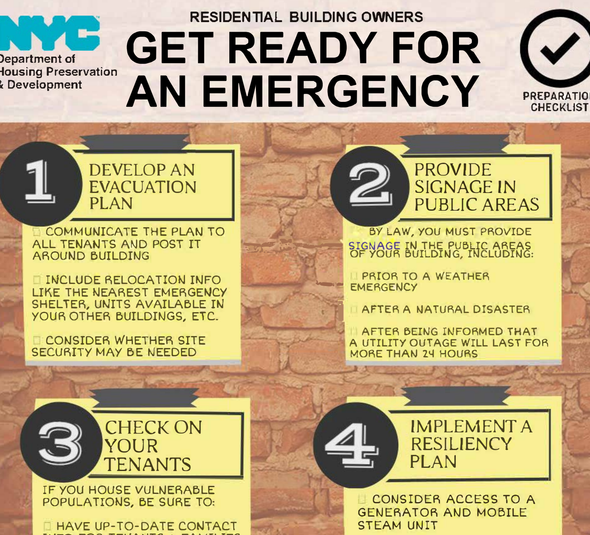
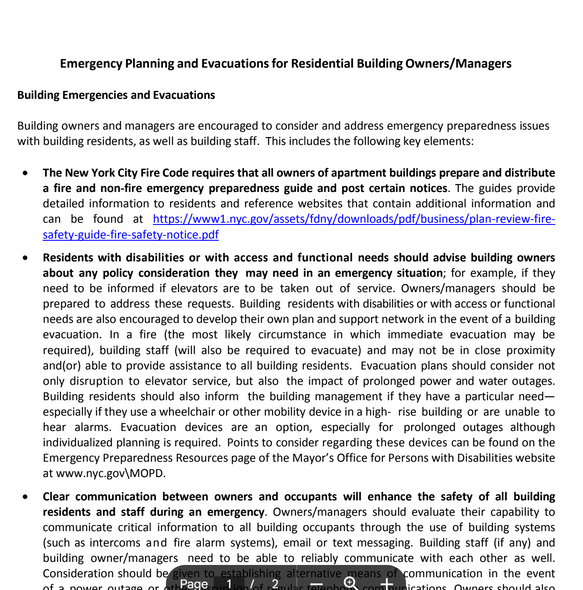
NYC HPD Emergency Preparedness Checklist for Building Owners(pdf file)
hpdsigns.nyc