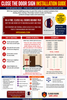
NYC CLOSE THE DOOR SIGN INSTALLATION GUIDE FDNY REQUIREMENT – NYC ADMINISTRATIVE CODE §15-135 ( pdf file)

(No reviews yet) Write a Review
SKU:
NYC CLOSE THE DOOR SIGN INSTALLATION GUIDE FDNY REQUIREMENT – NYC ADMINISTRATIVE CODE §15-135 ( pdf file)
MPN:
NYC CLOSE THE DOOR SIGN
  • in a fire CLOSE THE DOOR SIGN NYC ADMINISTRATIVE CODE §15-135
  • NYC CLOSE THE DOOR SIGN INSTALLATION GUIDE FDNY REQUIREMENT – NYC ADMINISTRATIVE CODE §15-135 ( pdf file)
  • NYC CLOSE THE DOOR SIGN INSTALLATION GUIDE FDNY REQUIREMENT – NYC ADMINISTRATIVE CODE §15-135 ( pdf file)
  • NYC CLOSE THE DOOR SIGN INSTALLATION GUIDE FDNY REQUIREMENT – NYC ADMINISTRATIVE CODE §15-135 ( pdf file)
  • NYC CLOSE THE DOOR SIGN INSTALLATION GUIDE FDNY REQUIREMENT – NYC ADMINISTRATIVE CODE §15-135 ( pdf file)
  • NYC CLOSE THE DOOR SIGN INSTALLATION GUIDE FDNY REQUIREMENT – NYC ADMINISTRATIVE CODE §15-135 ( pdf file)
$0.00
Frequently bought together:

Description


NYC CLOSE THE DOOR SIGN INSTALLATION GUIDE

FDNY REQUIREMENT – NYC ADMINISTRATIVE CODE §15-135

Local Law 115 of 2018


PURPOSE OF THE LAW

The NYC "In a Fire, Close All Doors Behind You" notice was created to remind residents that closing apartment and stairwell doors during a fire can save lives.

When apartment doors are left open during a fire:

  • Smoke spreads rapidly through hallways.
  • Fire can extend beyond the apartment where it started.
  • Stairwells become filled with smoke.
  • Occupants lose safe evacuation routes.
  • Firefighters have greater difficulty controlling the fire.

Closing doors helps:

  • Contain fire and smoke.
  • Protect hallways and stairwells.
  • Maintain safer escape routes.
  • Assist firefighters during emergency operations.
  • Reduce injuries and deaths.

The FDNY states that the notice serves as a visible reminder to building residents of the importance of closing doors when exiting an apartment during a fire because closed doors help contain smoke and flames and prevent smoke from entering stairways used for evacuation.


LEGAL REQUIREMENT

NYC Administrative Code §15-135 requires owners of multiple dwellings to post notices reminding occupants to close all doors behind them when escaping a fire.

FDNY Rule 3 RCNY §401-06 establishes the format, installation requirements, and maintenance requirements for the notice.


WHERE MUST THE SIGN BE INSTALLED?

FDNY Rule 3 RCNY §401-06 states:

"Close the door notices shall be posted and maintained on the public hallway corridor side of each stairwell door in the building."

This means the sign must be installed on the hallway side of every enclosed stairwell door throughout the building.


CORRECT INSTALLATION LOCATION

Install the sign:

  • On the public hallway side of the stairwell door.
  • Where building occupants can easily see it before entering the stairwell.
  • On every floor containing an enclosed stairwell door.
  • Adjacent to the stairwell door or directly on the door, where clearly visible.
  • In a conspicuous location.

The sign should be visible to residents walking through the corridor toward the stairwell.


EXAMPLE – BUILDING WITH ONE STAIRWELL

A five-story building with one enclosed stairwell requires:

Floor 1 – One sign

Floor 2 – One sign

Floor 3 – One sign

Floor 4 – One sign

Floor 5 – One sign

Total Required Signs: 5


EXAMPLE – BUILDING WITH TWO STAIRWELLS

A six-story building with two enclosed stairwells requires:

Floor 1

  • Stair A Door – One sign
  • Stair B Door – One sign

Floor 2

  • Stair A Door – One sign
  • Stair B Door – One sign

Floor 3

  • Stair A Door – One sign
  • Stair B Door – One sign

Continue through every floor.

Total signs required equal the number of enclosed stairwell doors in the building.


OPEN STAIR EXCEPTION

FDNY Rule 3 RCNY §401-06 provides an exception:

"No posting is required for an open stair."

If the stairway is open and does not have an enclosed stairwell door, the sign is not required.


LOCATIONS WHERE THE SIGN IS NOT REQUIRED

The sign is not required:

  • Inside apartments.
  • Inside stairwells.
  • Inside mechanical rooms.
  • Inside boiler rooms.
  • Inside storage rooms.
  • Inside elevator cars.
  • Only in the lobby.

The required location is specifically the hallway side of each enclosed stairwell door.


SIGN SIZE REQUIREMENTS

The FDNY requires the notice to be at least:

2¾ inches high × 12 inches wide

Larger signs are permitted and often improve visibility.


SIGN COLOR REQUIREMENTS

The sign must use one of the following formats:

Option 1:

  • White lettering on a fire-engine red background.

Option 2:

  • Fire-engine red lettering on a white background.

All text must be clearly legible.


REQUIRED SIGN CONTENT

The sign must contain substantially the following wording:

IN A FIRE, CLOSE ALL DOORS BEHIND YOU!

KEEP FIRE AND SMOKE OUT OF BUILDING HALLWAYS AND STAIRS.

KEEP APARTMENT AND STAIRWELL DOORS CLOSED AT ALL OTHER TIMES.

PROTECT YOUR NEIGHBORS AND YOUR HOME!

NYC Admin Code §15-135

The sign must also include the required fire door illustration specified by FDNY.


APPROVED SIGN MATERIALS

The notice may be:

  • Laminated with firm backing.
  • Mounted under clear plexiglass.
  • Printed as a vinyl adhesive-backed decal.
  • Produced using permanent, water-resistant printing methods.

MAINTENANCE REQUIREMENTS

Building owners must:

  • Keep signs visible.
  • Keep signs legible.
  • Replace damaged signs.
  • Replace missing signs promptly.
  • Maintain compliance with FDNY requirements.

Signs that become faded, torn, damaged, or unreadable should be replaced immediately.


INSPECTION CONSIDERATIONS

During FDNY, HPD, or other building inspections, inspectors may verify:

  • The sign is present.
  • The sign is installed at each required stairwell door.
  • The sign is legible.
  • The sign is properly maintained.
  • The sign complies with FDNY format requirements.

WHY THIS SIGN MATTERS

Most fire deaths are caused by smoke inhalation rather than direct flame exposure. When apartment and stairwell doors are closed, smoke and fire are contained for a longer period, giving occupants more time to escape and firefighters more time to control the fire.

A simple act—closing the door behind you—can significantly reduce the spread of fire and smoke and help save lives.


Code References

NYC Administrative Code §15-135 – Notice Regarding Closed Doors and Fires

Local Law 115 of 2018 – Requiring Notice to Close Doors When Escaping a Fire

FDNY Rule 3 RCNY §401-06 – Fire and Emergency Preparedness Guide, Checklist and Notices

Provided by HPDSIGNS.NYC
NYC Required Building Safety Signs and Notices


The NYC "Close the Door" sign is a life-safety notice required by Local Law 115 of 2018 and NYC Administrative Code §15-135. The sign must be installed on the hallway side of every enclosed stairwell door in a multiple dwelling and maintained in good condition.

The purpose of the law is simple but critical: closed doors slow the spread of fire and smoke, protect evacuation routes, assist firefighters, and save lives. By reminding residents to close doors behind them during a fire, the law helps prevent tragedies and improves safety for everyone in the building.


DISCLAIMER:This summary is provided for general informational purposes only and does not constitute legal, engineering, architectural, or code-compliance advice. Building owners, landlords, contractors, and property managers are responsible for verifying all current requirements with the applicable New York City agencies and licensed professionals. NYC laws, codes, and regulations may change over time.


DISCLAIMER: The information, images, and attached flyer are provided for informational purposes only. This flyer was originally created and distributed free of charge by the New York City Department of Sanitation (“DSNY”) and may be downloaded directly from official New York City government websites. Our company is not affiliated with, endorsed by, authorized by, or acting on behalf of DSNY or any New York City agency. We are providing this material free of charge solely as a public convenience and educational resource.

While we attempt to provide accurate and up-to-date information, laws, regulations, enforcement dates, penalties, and compliance requirements may change without notice. Property owners, managers, and buyers are solely responsible for verifying all requirements directly with official New York City sources, including DSNY and the NYC Administrative Code. Our company makes no guarantees regarding completeness, accuracy, legal compliance, or inspection acceptance and assumes no liability for errors, omissions, losses, violations, penalties, or damages arising from the use of this information or flyer.


DISCLAIMER to comply with the New York City Consumer Protection Law which applies to all businesses operating in New York City: We are small family-owned and family-operated Brooklyn-based business. We are not a City of New York store nor are the website, products or services affiliated with the City of New York or any agency of the City of New York. We ourselves, our business, websites, products, services, or any hyperlinks from its website are not sponsored by, approved by, affiliated with, endorsed by, or connected to the City of New York or any agency of the City of New York, including but not limited to HPD, DOB, DOT, DSNY, FDNY and federal directly or by implication.

DISCLAIMER These codes may not be the most recent version. The State / federal or other regulation department may have more current or accurate information. We make no warranties or guarantees about the accuracy, completeness, or adequacy of the information contained on this site or the information linked to on the state site. Please check official sources.

The requirements for sign content are determined by intended use and by applicable regulation. The BUYER is responsible for determining the appropriate content for a sign or package of signs.  WE makes no warranty or representation of suitability of a sign for any specific application. IT IS THE CUSTOMER'S RESPONSIBILITY TO ENSURE THAT THE SIGNS THE CUSTOMER ORDERS ARE IN COMPLIANCE WITH ALL STATE, FEDERAL, LOCAL, AND MUNICIPAL LAWS. Please review terms and conditions prior to purchase. 

For more information about what is required, see the laws that are referenced and the rules applicable to your city and state. This page is for informational purposes only and is not intended as legal advice, professional advice or a statement of law. You may wish to consult with an attorney.

View AllClose