hpdsigns.nyc
NYC Administrative Code Title 27 THE CODE BOOK-for Landlords & Building Owners ( PDF FILE )
- SKU:
- NYC Administrative Code Title 27 THE CODE BOOK-for Landlords & Building Owners ( PDF FILE )
- MPN:
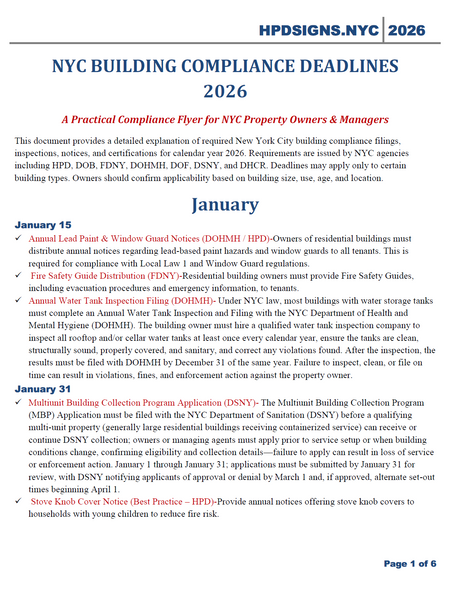
- NYC Clean Buildings Waste Management Guide


Description
NYC Administrative Code Title 27
Simple Summary for Landlords & Building Owners
What Is Title 27?
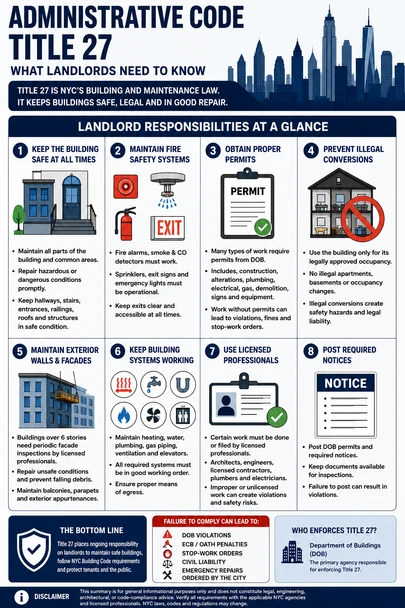
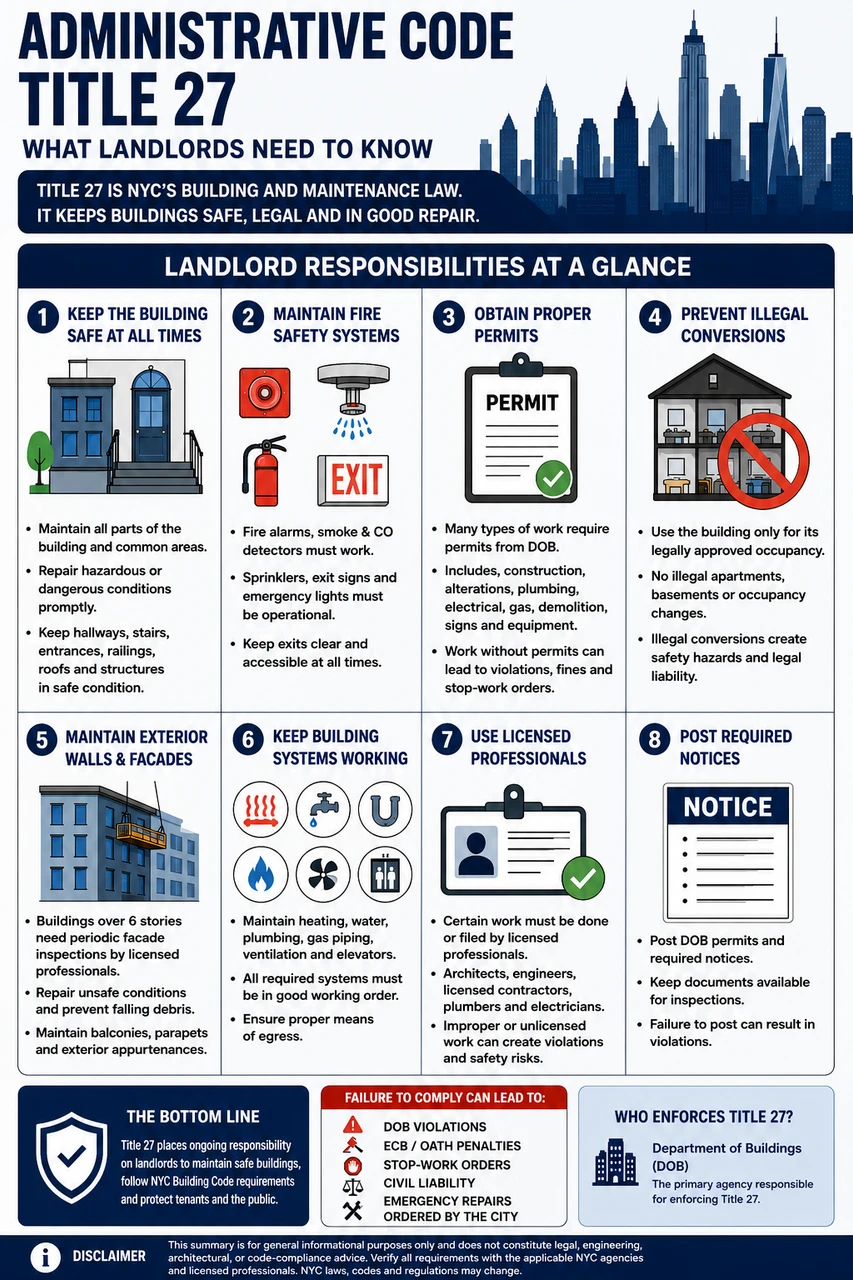
NYC Administrative Code Title 27 is the main set of New York City rules that govern how buildings must be constructed, maintained, repaired, and safely operated.
It applies to:
- Apartment buildings
- Mixed-use buildings
- Commercial properties
- Residential homes
- Existing and new buildings
The purpose of the law is to protect:
- Tenant safety
- Public safety
- Fire safety
- Structural stability
- Health and welfare of occupants
Main Responsibilities of Landlords
1. Keep the Building Safe at All Times
Landlords are responsible for maintaining the entire property in safe condition, including:
- Hallways
- Stairs
- Entrances
- Roofs
- Exterior walls
- Fire escapes
- Railings
- Common areas
Unsafe conditions must be repaired promptly.
2. Maintain Fire Safety Systems
Required fire protection systems must remain operational and properly maintained, including:
- Fire alarms
- Smoke detectors
- Carbon monoxide detectors
- Sprinklers
- Exit signs
- Emergency lighting
- Fire extinguishing equipment
Blocked exits or non-working fire systems can result in violations and penalties.
3. Obtain Proper Permits
Many types of work require permits from NYC Department of Buildings, including:
- Construction
- Alterations
- Plumbing work
- Gas work
- Electrical work
- Demolition
- Sign installation
- Equipment installation
Work performed without permits may lead to violations, stop-work orders, or fines.
4. Prevent Illegal Conversions
Buildings may only be occupied for their legally approved use.
Examples of illegal conversions include:
- Creating extra apartments without approval
- Converting basements illegally
- Exceeding legal occupancy limits
- Changing building use without permits
Illegal occupancy conditions can create major safety hazards and legal liability.
5. Maintain Exterior Walls & Facades
Buildings over six stories must undergo periodic facade and exterior wall inspections by licensed professionals.
Owners are responsible for:
- Repairing unsafe facade conditions
- Preventing falling debris hazards
- Maintaining balconies, parapets, and exterior appurtenances
Failure to maintain exterior walls can result in significant penalties.
6. Keep Building Systems Working
Landlords must maintain:
- Heating systems
- Water systems
- Plumbing
- Gas piping
- Ventilation systems
- Elevators
- Means of egress
All required building systems must remain in good working order.
7. Use Licensed Professionals When Required
Certain work must be performed or filed by licensed professionals such as:
- Architects
- Engineers
- Licensed plumbers
- Licensed electricians
- Licensed contractors
Improper or unlicensed work can create violations and safety risks.
Important Takeaway
Title 27 places ongoing responsibility on landlords and building owners to:
- Maintain safe buildings
- Follow NYC Building Code requirements
- Protect tenants and the public
- Correct unsafe conditions
- Obtain permits when required
- Maintain legal occupancy and fire safety compliance
Ignoring these responsibilities can lead to:
- DOB violations
- ECB/OATH penalties
- Stop-work orders
- Civil liability
- Emergency repairs ordered by the City
DISCLAIMER:This summary is provided for general informational purposes only and does not constitute legal, engineering, architectural, or code-compliance advice. Building owners, landlords, contractors, and property managers are responsible for verifying all current requirements with the applicable New York City agencies and licensed professionals. NYC laws, codes, and regulations may change over time.
DISCLAIMER: The information, images, and attached flyer are provided for informational purposes only. This flyer was originally created and distributed free of charge by the New York City Department of Sanitation (“DSNY”) and may be downloaded directly from official New York City government websites. Our company is not affiliated with, endorsed by, authorized by, or acting on behalf of DSNY or any New York City agency. We are providing this material free of charge solely as a public convenience and educational resource.
While we attempt to provide accurate and up-to-date information, laws, regulations, enforcement dates, penalties, and compliance requirements may change without notice. Property owners, managers, and buyers are solely responsible for verifying all requirements directly with official New York City sources, including DSNY and the NYC Administrative Code. Our company makes no guarantees regarding completeness, accuracy, legal compliance, or inspection acceptance and assumes no liability for errors, omissions, losses, violations, penalties, or damages arising from the use of this information or flyer.
DISCLAIMER to comply with the New York City Consumer Protection Law which applies to all businesses operating in New York City: We are small family-owned and family-operated Brooklyn-based business. We are not a City of New York store nor are the website, products or services affiliated with the City of New York or any agency of the City of New York. We ourselves, our business, websites, products, services, or any hyperlinks from its website are not sponsored by, approved by, affiliated with, endorsed by, or connected to the City of New York or any agency of the City of New York, including but not limited to HPD, DOB, DOT, DSNY, FDNY and federal directly or by implication.
DISCLAIMER These codes may not be the most recent version. The State / federal or other regulation department may have more current or accurate information. We make no warranties or guarantees about the accuracy, completeness, or adequacy of the information contained on this site or the information linked to on the state site. Please check official sources.
The requirements for sign content are determined by intended use and by applicable regulation. The BUYER is responsible for determining the appropriate content for a sign or package of signs. WE makes no warranty or representation of suitability of a sign for any specific application. IT IS THE CUSTOMER'S RESPONSIBILITY TO ENSURE THAT THE SIGNS THE CUSTOMER ORDERS ARE IN COMPLIANCE WITH ALL STATE, FEDERAL, LOCAL, AND MUNICIPAL LAWS. Please review terms and conditions prior to purchase.
For more information about what is required, see the laws that are referenced and the rules applicable to your city and state. This page is for informational purposes only and is not intended as legal advice, professional advice or a statement of law. You may wish to consult with an attorney.
Related Products


NYC housing Maintenance Code (pdf file)
hpdsigns.nyc


2025-NYC Fire Department Checklist for Building Owners (pdf file)
hpdsigns.nyc

HPD / NYC HOUSING MAINTENANCE CODE (PDF file)
hpdsigns.nyc