Every All-Electric Building in NYC Should Display an All-Electric Building Notice Sign(pdf)
(No reviews yet) Write a Review
SKU:
All-Electric Building Sign NYC | HPD Inspection (pdf)
MPN:
All-Electric Building Sign NYC | HPD Ins
  • all electric building hpd violation
  • gas leak violation in electric building ?
$0.00
Frequently bought together:

Description

Why Every All-Electric Building in NYC Should Display an All-Electric Building Notice Sign

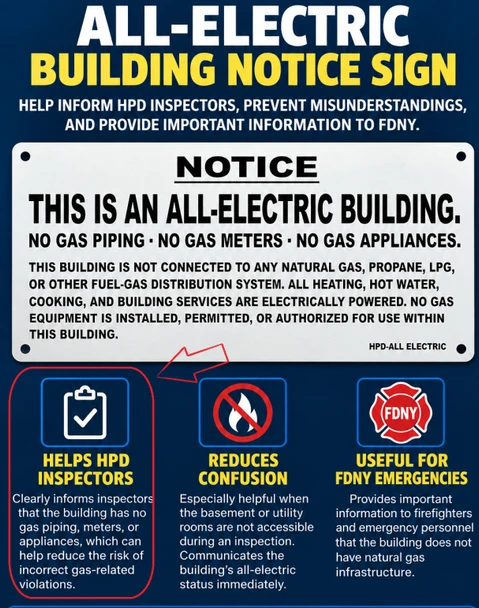
Help HPD Inspectors Identify Your Building, Reduce the Risk of Incorrect Gas-Related Violations, and Provide Important Information to FDNY During Emergencies

What Is an All-Electric Building Notice Sign?

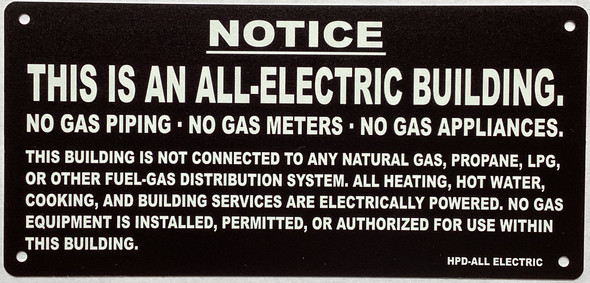
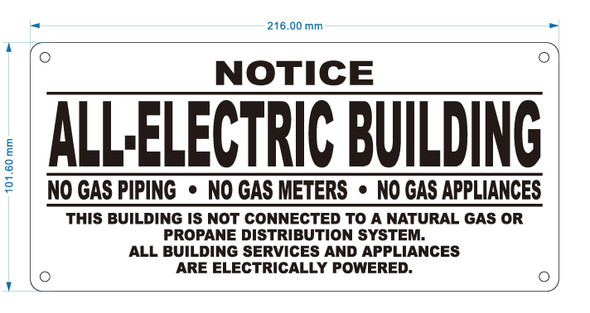
An All-Electric Building Notice Sign is an informational building sign designed to clearly identify a property that operates entirely on electricity and does not contain natural gas piping, gas meters, or gas-powered appliances.

The sign informs NYC Housing Preservation and Development (HPD) inspectors, Fire Department of New York (FDNY) personnel, building maintenance workers, tenants, and other visitors that the property does not have an installed fuel-gas distribution system.

A typical sign states:

NOTICE — THIS IS AN ALL-ELECTRIC BUILDING.

NO GAS PIPING · NO GAS METERS · NO GAS APPLIANCES.

It further explains that the building's heating, hot water, cooking equipment, and other building services operate electrically.

Although this is an informational sign rather than a universally mandated HPD sign, displaying it prominently can be a practical precaution for owners of qualifying all-electric properties.

1. Why an All-Electric Building Sign Is Important During HPD Inspections

One of the most important reasons to display an All-Electric Building Notice Sign is to communicate essential building information to HPD inspectors before they evaluate gas-related requirements.

NYC residential buildings are subject to numerous inspection requirements involving smoke detectors, carbon monoxide detectors, natural gas detectors, tenant notices, and building safety.

However, not every requirement applies to every property.

A building with no gas piping may qualify for an exemption from natural gas detector installation requirements.

Under NYC regulations, the presence or absence of gas piping is a significant factor in determining whether natural gas detection devices are required.

An inspector must therefore distinguish between a building with natural gas infrastructure and one that genuinely has no gas piping or gas service.

An All-Electric Building Notice Sign helps communicate this distinction immediately.

What Happens When an HPD Inspector Cannot Access the Basement?

Consider a common inspection situation.

An HPD inspector arrives at a residential building to investigate a complaint or perform a routine inspection.

The inspector can access the lobby, hallways, stairways, and certain apartments, but the basement is locked.

The superintendent is unavailable, and the inspector cannot enter the mechanical room to determine whether the building has gas meters, gas piping, or gas-fired heating equipment.

Without additional information, the inspector may be unable to verify whether the building has natural gas service.

This creates uncertainty about which gas-related requirements apply.

An inspector should not automatically conclude that gas service exists simply because basement access is unavailable. Nevertheless, incomplete access can make it more difficult to establish the building's actual condition.

A prominently displayed All-Electric Building Notice Sign immediately informs the inspector that the property is represented as having no gas piping, no gas meters, and no gas appliances.

The sign can prompt the inspector to verify the building's all-electric status rather than evaluating the property on an incorrect assumption.

This may help prevent misunderstandings, unnecessary follow-up, and potentially incorrect gas-detector findings.

The sign does not replace an inspection or official documentation, but it provides valuable information when access is limited.

2. Help Reduce the Risk of Incorrect Natural Gas Detector Violations

NYC Local Law 157 of 2016 established requirements for natural gas detection devices in certain residential buildings.

Subsequent regulations and legislation clarified installation requirements and compliance deadlines.

As of October 2026, the natural gas detector compliance deadline has been extended to January 1, 2027, subject to possible further extension.

Importantly, NYC regulations recognize an exception for buildings without gas piping or gas service.

Under 1 RCNY § 908-02, the natural gas alarm installation requirements do not apply to buildings that do not have gas piping or gas service.

Additionally, 28 RCNY § 12-14 addresses exemptions for buildings without gas piping.

Why this matters for all-electric buildings

Imagine an apartment building with:

  • Electric heating systems

  • Electric water heaters

  • Electric cooking appliances

  • No natural gas meters

  • No natural gas piping

  • No natural gas connection

If the building meets the applicable exemption requirements, its owner should not be required to install natural gas detectors solely because other residential buildings are required to have them.

Nevertheless, the building's gas-free status may not be obvious to an inspector standing in the lobby.

An All-Electric Building Notice Sign provides an immediate explanation.

Instead of leaving the inspector to determine the building's fuel source without information, the sign clearly identifies the property as all-electric.

This can help building owners avoid unnecessary confusion about natural gas detector requirements and reduce the risk of an incorrect violation based on mistaken building information.

However, owners should maintain documentation proving that the building qualifies for the exemption and complete any applicable HPD exemption filing. The sign itself is not an exemption certificate.

3. Help Clarify Gas-Related Posting and Notice Requirements

NYC residential property owners must comply with several different notification requirements involving gas safety.

These requirements are not identical.

Natural gas detector notices concern the installation, maintenance, and responsibilities associated with natural gas detection devices.

Suspected gas leak notices explain what tenants should do if they smell gas or suspect a leak.

An all-electric building may qualify for exemptions from certain natural gas detector requirements and related postings because it contains no gas piping.

However, the suspected gas leak notice is a separate legal requirement, and owners should not assume that an all-electric designation eliminates it.

NYC HPD and NYC311 describe suspected gas leak notice requirements for residential properties, including posting and tenant distribution.

An All-Electric Building Notice Sign is useful because it explains the actual building configuration to inspectors and residents, but it does not automatically replace any required gas leak notice.

For property managers, the most effective approach is to identify which notices apply to the specific property and maintain the appropriate documentation.

4. Provide Important Information When Building Mechanical Rooms Are Locked

Many NYC buildings have restricted-access spaces, including:

  • Basement mechanical rooms

  • Utility meter rooms

  • Boiler rooms

  • Electrical equipment rooms

  • Maintenance areas

These spaces may be locked for security and safety reasons.

An HPD inspector, contractor, or emergency responder may not always have immediate access.

In such situations, a properly displayed All-Electric Building Notice Sign communicates important information without requiring immediate entry into restricted areas.

For example, a sign in the main entrance lobby can tell an inspector that the building is represented as having no natural gas piping or gas meters.

This helps the inspector understand the building's configuration before requesting additional records or access.

It may also reduce unnecessary inquiries about gas infrastructure that does not exist.

The goal is not to replace access to the basement. The goal is to provide accurate building information before access is obtained.

Owners remain responsible for providing legally required inspection access and supporting documentation.

5. Why an All-Electric Building Sign Is Helpful to FDNY During Emergencies

An All-Electric Building Notice Sign is not only useful during HPD inspections.

It can also provide helpful preliminary information to FDNY firefighters and other emergency personnel responding to a building.

During a fire, smoke condition, electrical malfunction, or other emergency, responders need to understand the building's utilities and potential hazards.

In buildings containing natural gas, responders may need to consider gas meters, fuel-gas piping, gas-powered appliances, and the possibility of gas leaks.

A genuinely all-electric building presents a different utility configuration.

A clearly visible sign identifying the property as all-electric may help emergency personnel understand that the building owner reports no installed fuel-gas system.

Example: FDNY Responds to a Basement Fire

Imagine firefighters responding to smoke coming from the basement of an apartment building.

In a conventional gas-serviced building, responders may need to identify natural gas infrastructure as part of their emergency assessment.

In an all-electric building, a posted notice stating that no gas piping or gas meters are installed can provide useful preliminary information.

Firefighters can then incorporate that information into their assessment while independently verifying the building's conditions.

The sign may help responders focus attention on relevant electrical equipment and other hazards.

However, firefighters must never rely exclusively on a sign to rule out gas or other dangerous conditions. Building modifications, unauthorized equipment, external gas migration, and inaccurate or outdated signage can create risks.

An All-Electric Building Notice Sign is a supplemental emergency information tool, not an official FDNY hazard assessment or substitute for required fire safety signage.

6. Help Tenants Understand That Their Building Has No Gas Service

Tenants may not know whether their apartment building has natural gas service.

Some residents assume that all NYC apartment buildings contain gas piping, particularly in older neighborhoods where gas heating and cooking are common.

An All-Electric Building Notice Sign clearly communicates that the building operates without natural gas infrastructure.

This can help tenants understand why their apartments contain electric cooking equipment and why the property may be treated differently under natural gas detector requirements.

It can also discourage misunderstandings about whether gas appliances can be installed.

In a building without gas infrastructure, tenants should not attempt to install or connect unauthorized gas equipment.

The sign reinforces that gas appliances are not part of the building's approved utility configuration.

Importantly, the absence of natural gas service does not eliminate the need for smoke detectors, electrical safety, or other applicable building protections.

7. Protect Property Owners Against Unnecessary Administrative Problems

An incorrectly issued violation can create significant administrative work.

A building owner may need to:

  1. Review the violation and identify the incorrect assumption.

  2. Gather utility records, mechanical documentation, or other evidence.

  3. Contact HPD or follow the applicable correction or challenge procedure.

  4. Arrange access or inspections to verify the building's actual condition.

  5. Submit documentation demonstrating that the cited requirement does not apply.

Depending on the violation, this may involve management time, professional assistance, inspections, and possible expenses.

A simple All-Electric Building Notice Sign may help prevent some misunderstandings before they develop into administrative problems.

It gives inspectors a visible indication of the building's actual fuel configuration.

Although a sign cannot guarantee that violations will be avoided, it can be one part of a sensible compliance strategy.

For owners of qualifying all-electric buildings, providing clear information before an inspection is generally easier than resolving confusion afterward.

8. Where Should an All-Electric Building Notice Sign Be Installed?

For maximum visibility, building owners should consider placing the sign where inspectors, emergency responders, and maintenance personnel are likely to see it.

Recommended primary location: Main building entrance or lobby.

A sign near the entrance can be noticed shortly after entering the property, even when the basement or utility rooms are inaccessible.

Additional useful locations may include:

  • Near the building's main information or required-notice area

  • At the basement entrance

  • Near the mechanical room entrance

  • At a designated maintenance information area

The sign should be mounted securely, remain readable, and not obstruct required notices or emergency equipment.

Because this particular informational sign does not have a universal HPD installation location requirement, placement should be selected based on visibility and building conditions.

9. Which Buildings Should Consider Posting This Sign?

An All-Electric Building Notice Sign may be useful for residential properties that genuinely operate without any fuel-gas infrastructure.

Examples include newly constructed all-electric apartment buildings, older buildings that have fully removed their gas systems, and residential properties designed to use electric heating, electric water heating, and electric cooking.

However, owners must distinguish between a fully gas-free building and a building that merely does not use gas in individual apartments.

A building should not be labeled as having no gas piping if it still contains gas infrastructure in the basement, commercial spaces, or other areas.

For example, a building with electric stoves in every apartment but a natural gas boiler in the basement is not an all-electric building.

Similarly, a building with disconnected gas appliances but remaining gas piping should not automatically be described as having no gas piping.

Before posting the sign, verify that its statements accurately describe the entire building.

10. An Inexpensive Way to Improve Building Communication

An All-Electric Building Notice Sign provides a simple, permanent way to communicate important building information.

For property owners and managers, the potential benefits include:

  • Helping HPD inspectors identify the building's all-electric status

  • Reducing confusion when basement or utility room access is unavailable

  • Helping clarify whether natural gas detector requirements apply

  • Supporting efforts to avoid incorrect gas-related violations

  • Providing useful preliminary utility information to FDNY

  • Informing tenants, contractors, and maintenance personnel

  • Making building information easier to identify during inspections and emergencies

The value of the sign comes from its clarity.

Instead of requiring every inspector or visitor to ask whether the building has gas service, the information is displayed prominently.

For a building that genuinely contains no gas piping, gas meters, or gas appliances, this is a practical addition to its overall safety and compliance signage.

Conclusion: A Small Sign That Can Prevent Big Misunderstandings

NYC building owners are responsible for maintaining safe properties and complying with applicable HPD and DOB regulations.

However, the requirements for a building containing natural gas infrastructure are not always the same as those for a building without gas piping.

When an inspector cannot access the basement or mechanical room, identifying the building's actual utility configuration may become more difficult.

Posting an All-Electric Building Notice Sign helps communicate that the building has no natural gas piping, meters, or appliances, reducing the possibility of misunderstandings about gas-related requirements.

It can also provide useful information to FDNY, maintenance workers, contractors, and tenants.

For qualifying all-electric buildings, this simple sign is a sensible addition to a well-organized building information and safety program.

Make Your All-Electric Building Clearly Identifiable — Before the Next HPD Inspection.


Important Compliance Information

An All-Electric Building Notice Sign is an informational product. It is not an official HPD exemption certificate, does not replace required postings, and does not guarantee protection against violations.

Building owners should verify the absence of gas piping and gas service, maintain supporting records, comply with any required exemption filing procedures, and follow current NYC HPD, DOB, and FDNY regulations.

Buildings without fossil-fuel-burning devices may also qualify for certain carbon monoxide detector exemptions, but enclosed parking and other conditions can affect eligibility. Smoke detector requirements remain independently applicable.

Independent product disclaimer: This sign is not issued, approved, or endorsed by NYC HPD, NYC DOB, or FDNY. Building owners are responsible for determining whether the sign accurately describes their property and for complying with applicable laws.


Disclaimer

This information is provided for general educational and informational purposes only and should not be considered legal, engineering, architectural, code compliance, or professional advice. Building regulations, zoning requirements, Certificates of Occupancy, and applicable New York City laws may vary depending on the property's occupancy classification, construction type, alteration history, and location. Always consult the current New York City Building Code, Housing Maintenance Code, Fire Code, Zoning Resolution, the appropriate city agencies, and/or a licensed architect, professional engineer, or qualified code consultant before making decisions regarding the alteration, rental, occupancy, or use of any basement or cellar space.


LEGAL DISCLAIMER, LIMITATION OF LIABILITY, AND TERMS OF USE

INDEPENDENT SMALL FAMILY-OWNED BUSINESS NOTICE

We are an independent privately owned small family-owned business operating in the United States.

We are NOT the City of New York, HPD, DOB, FDNY, DSNY, DEP, DOT, DHCR, HUD, OSHA, EPA, FEMA, any state agency, any federal agency, or any governmental, quasi-governmental, regulatory, enforcement, housing, building, fire, transportation, sanitation, environmental, health, public safety, or public authority organization.

We are not affiliated with, endorsed by, approved by, sponsored by, authorized by, certified by, partnered with, or connected in any manner with any governmental agency or authority.

Any references to governmental agencies, laws, regulations, codes, standards, ordinances, inspections, notices, permits, requirements, compliance programs, enforcement actions, or public resources are provided solely for informational and descriptive purposes and do not imply endorsement, approval, certification, sponsorship, authorization, partnership, or affiliation.

Many governmental publications, flyers, brochures, forms, notices, checklists, and educational materials referenced, reproduced, summarized, attached, linked, or distributed by our company are publicly available documents that may be obtained directly from the applicable government agency, often at no charge.

INFORMATIONAL PURPOSES ONLY

All content, products, services, signs, sign packages, notices, brochures, flyers, downloadable files, PDF documents, checklists, product descriptions, blog articles, compliance guides, customer communications, emails, specifications, marketing materials, and related information are provided solely for general informational and educational purposes.

Information may become outdated, amended, revised, superseded, interpreted differently, or withdrawn without notice.

Laws, regulations, building codes, fire codes, housing requirements, inspection procedures, accessibility requirements, environmental regulations, insurance requirements, safety standards, and governmental policies frequently change and may vary by jurisdiction, occupancy type, building classification, property use, location, agency interpretation, and individual circumstances.

We make no representation, warranty, or guarantee that any information provided is accurate, complete, current, reliable, applicable, legally sufficient, or appropriate for any specific situation.

Users assume all risk associated with reliance upon any information provided.

NO PROFESSIONAL ADVICE

Nothing provided by our company shall be construed as:

• Legal advice
• Engineering advice
• Architectural advice
• Fire protection advice
• Life safety advice
• Accessibility advice
• ADA compliance advice
• Building code advice
• Fire code advice
• Housing code advice
• Inspection advice
• Regulatory advice
• Tax advice
• Insurance advice
• Real estate advice
• Environmental advice
• Construction advice
• Property management advice
• Professional consulting services of any kind

No attorney-client, consultant-client, architect-client, engineer-client, contractor-client, professional-client, or fiduciary relationship is created through the use of our website, purchase of products, receipt of materials, or communication with our company.

Customers should consult qualified attorneys, architects, engineers, code consultants, licensed contractors, fire protection professionals, insurance professionals, accountants, and applicable governmental authorities regarding their specific circumstances.

GOVERNMENT PUBLICATION DISCLAIMER

Any government-related document, brochure, flyer, checklist, guide, notice, publication, form, or educational material distributed by our company is provided solely as a convenience to customers.

Such materials remain the property of their respective agencies and organizations.

Our company does not create, maintain, update, approve, certify, validate, or control the contents of such governmental publications.

Government agencies may revise, amend, replace, withdraw, reinterpret, or update such materials at any time without notice.

Customers should always consult the original official governmental source for the most current information.

Official government publications, agency guidance, statutes, regulations, rules, code provisions, interpretations, and enforcement positions shall always control over any summary, reproduction, attachment, description, reference, or explanation provided by our company.

CUSTOMER RESPONSIBILITY FOR COMPLIANCE

The customer, property owner, landlord, management company, architect, engineer, contractor, installer, purchaser, building owner, consultant, and end user bear sole and exclusive responsibility for determining:

• Whether signage is required
• What signage is required
• Applicable laws and regulations
• Sign wording and content
• Sign dimensions and specifications
• Material requirements
• Installation requirements
• Placement requirements
• Inspection requirements
• Permit requirements
• Accessibility requirements
• Fire safety requirements
• Building safety requirements
• Environmental requirements
• Insurance requirements
• Operational requirements

Purchasing any sign, sign package, decal, placard, marker, notice, template, guide, checklist, flyer, brochure, or informational material from us does not constitute compliance with any law, code, regulation, ordinance, permit, inspection requirement, insurance requirement, governmental directive, court order, or regulatory obligation.

SIGNAGE DISCLAIMER

All signs, labels, notices, placards, decals, markers, plates, directories, room identification signs, building signs, compliance signs, and related products are provided solely as physical products.

We do not certify, guarantee, warrant, represent, or promise that any product:

• Meets any legal requirement
• Meets any code requirement
• Passes any inspection
• Satisfies any governmental requirement
• Creates legal compliance
• Creates regulatory compliance
• Meets insurance requirements
• Meets accessibility requirements
• Meets ADA requirements
• Meets OSHA requirements
• Meets FDNY requirements
• Meets HPD requirements
• Meets DOB requirements
• Prevents injury or property damage
• Eliminates legal obligations
• Eliminates regulatory obligations

The purchaser is solely responsible for determining suitability for the intended application.

INSTALLATION DISCLAIMER

Improper installation may create safety hazards, accessibility issues, regulatory violations, inspection failures, property damage, personal injury, or death.

We assume no responsibility whatsoever for:

• Installation methods
• Installation locations
• Placement decisions
• Fasteners selected
• Adhesive selection
• Structural attachment methods
• Mounting surfaces
• Electrical connections
• Maintenance practices
• Visibility requirements
• Accessibility requirements
• Inspection outcomes

All installation decisions remain the sole responsibility of the purchaser, installer, contractor, property owner, and building owner.

DISCLAIMER OF WARRANTIES

TO THE MAXIMUM EXTENT PERMITTED BY LAW, ALL PRODUCTS, SERVICES, INFORMATION, DOCUMENTS, DOWNLOADS, PUBLICATIONS, COMMUNICATIONS, AND MATERIALS ARE PROVIDED "AS IS," "WITH ALL FAULTS," AND "AS AVAILABLE."

WE EXPRESSLY DISCLAIM ALL WARRANTIES OF ANY KIND, WHETHER EXPRESS, IMPLIED, STATUTORY, OR OTHERWISE, INCLUDING WITHOUT LIMITATION:

• MERCHANTABILITY
• FITNESS FOR A PARTICULAR PURPOSE
• NON-INFRINGEMENT
• ACCURACY
• COMPLETENESS
• RELIABILITY
• PERFORMANCE
• DURABILITY
• CODE COMPLIANCE
• REGULATORY COMPLIANCE
• INSPECTION APPROVAL

NO ORAL OR WRITTEN STATEMENT SHALL CREATE ANY WARRANTY NOT EXPRESSLY SET FORTH IN A WRITTEN AGREEMENT SIGNED BY AN AUTHORIZED REPRESENTATIVE OF OUR COMPANY.

LIMITATION OF LIABILITY

TO THE MAXIMUM EXTENT PERMITTED BY LAW, OUR COMPANY, ITS OWNERS, FAMILY MEMBERS, EMPLOYEES, OFFICERS, DIRECTORS, AGENTS, REPRESENTATIVES, CONTRACTORS, SUCCESSORS, ASSIGNS, SUPPLIERS, DISTRIBUTORS, AFFILIATES, AND SERVICE PROVIDERS SHALL NOT BE LIABLE FOR ANY:

• Direct damages
• Indirect damages
• Consequential damages
• Incidental damages
• Special damages
• Punitive damages
• Exemplary damages
• Lost profits
• Lost revenue
• Lost business opportunities
• Business interruption damages
• Loss of use
• Loss of data
• Property damage
• Personal injury
• Bodily injury
• Death
• Government fines
• Civil penalties
• Violations
• Citations
• Inspection failures
• Enforcement actions
• Attorney fees
• Litigation expenses
• Regulatory actions

WHETHER ARISING FROM CONTRACT, TORT, NEGLIGENCE, STRICT LIABILITY, PRODUCT LIABILITY, WARRANTY, STATUTE, EQUITY, OR ANY OTHER LEGAL THEORY.

MAXIMUM LIABILITY CAP

IN ALL CIRCUMSTANCES, THE MAXIMUM AGGREGATE LIABILITY OF OUR COMPANY SHALL NOT EXCEED THE ACTUAL PURCHASE PRICE PAID FOR THE SPECIFIC PRODUCT THAT GAVE RISE TO THE CLAIM.

INDEMNIFICATION

The customer agrees to defend, indemnify, and hold harmless our company, its owners, family members, officers, employees, contractors, affiliates, successors, and assigns from and against any and all claims, demands, damages, losses, liabilities, penalties, fines, judgments, settlements, costs, expenses, and attorney fees arising from:

• Product use
• Product misuse
• Product installation
• Product modification
• Regulatory non-compliance
• Inspection failures
• Customer-provided content
• Customer instructions
• Property conditions
• Building conditions
• Third-party claims

THIRD-PARTY LINKS AND EXTERNAL RESOURCES

Any hyperlinks or references to government agencies, websites, laws, regulations, standards, organizations, publications, or third-party resources are provided solely as a convenience.

We do not control, endorse, verify, guarantee, maintain, or assume responsibility for third-party content and shall not be liable for any reliance placed upon such content.

GOVERNING LAW AND VENUE

This Legal Disclaimer, Limitation of Liability, and Terms of Use shall be governed by and construed under the laws of the State of New York, without regard to conflict-of-law principles.

Any dispute, claim, or legal proceeding shall be brought exclusively in the state or federal courts located within the State of New York.

ACCEPTANCE OF TERMS

By accessing our website, downloading materials, receiving information, purchasing products, requesting services, viewing content, or using any product, document, publication, flyer, guide, brochure, checklist, sign, or informational material provided by our company, the user acknowledges that they have read, understood, and agreed to be bound by this Legal Disclaimer, Limitation of Liability, and Terms of Use.

View AllClose