
hpdsigns.nyc
NYC FIREPROOF vs. NON-FIREPROOF BUILDINGS (pdf file)
- SKU:
- NYC FIREPROOF vs. NON-FIREPROOF BUILDINGS
- MPN:
- window guards nyc

Description
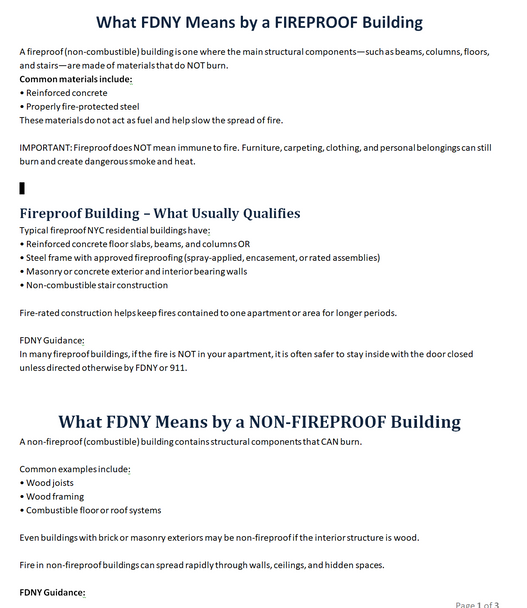
FIREPROOF vs. NON-FIREPROOF BUILDINGS
NYC Fire Safety – Simple Explanation Sheet
IMPORTANT NOTICE
Before posting or selecting ANY fire safety signs, instructions, or notices, the building’s classification MUST be confirmed with professional or the NYC Department of Buildings (DOB).
• Do NOT assume a building is fireproof based on appearance.
• Building type is determined by construction, not age, height, or exterior brick.
Always verify with:
• NYC Department of Buildings (DOB)
• Certificate of Occupancy
• Building Fire Safety Plan
• Managing agent or engineer
What FDNY Means by a FIREPROOF Building
A fireproof (non-combustible) building is one where the main structural components—such as beams, columns, floors, and stairs—are made of materials that do NOT burn.
Common materials include:
• Reinforced concrete
• Properly fire-protected steel
These materials do not act as fuel and help slow the spread of fire.
IMPORTANT: Fireproof does NOT mean immune to fire. Furniture, carpeting, clothing, and personal belongings can still burn and create dangerous smoke and heat.
Fireproof Building – What Usually Qualifies
Typical fireproof NYC residential buildings have:
• Reinforced concrete floor slabs, beams, and columns OR
• Steel frame with approved fireproofing (spray-applied, encasement, or rated assemblies)
• Masonry or concrete exterior and interior bearing walls
• Non-combustible stair construction
Fire-rated construction helps keep fires contained to one apartment or area for longer periods.
FDNY Guidance:
In many fireproof buildings, if the fire is NOT in your apartment, it is often safer to stay inside with the door closed unless directed otherwise by FDNY or 911.
What FDNY Means by a NON-FIREPROOF Building
A non-fireproof (combustible) building contains structural components that CAN burn.
Common examples include:
• Wood joists
• Wood framing
• Combustible floor or roof systems
Even buildings with brick or masonry exteriors may be non-fireproof if the interior structure is wood.
Fire in non-fireproof buildings can spread rapidly through walls, ceilings, and hidden spaces.
FDNY Guidance:
In many non-fireproof buildings, occupants are advised to evacuate immediately when safe to do so.
Why Building Classification Matters
FDNY uses building classification to determine:
• Fire Safety Notice instructions
• Stay-put vs. evacuation guidance
• Emergency response decisions
Posting incorrect fire safety signage can result in serious injury or loss of life.
Final Reminder
- Never guess whether a building is fireproof or non-fireproof
• Always confirm with NYC DOB before posting fire safety signs
• Fireproof does NOT mean fire-safe
• Always follow FDNY and emergency instructions during an incident
DISCLAIMER – IMPORTANT NOTICE
This document is provided for general informational and educational purposes only. It is not intended to serve as legal advice, engineering advice, fire safety certification, or an official determination of whether any building is classified as fireproof or non-fireproof. Building classification depends on specific construction details, approved plans, and official records, which may vary from building to building.
Property owners, managing agents, tenants, and occupants must independently verify the fireproof or non-fireproof status of their building with qualified professionals before relying on any information contained herein. Verification should be obtained through appropriate sources, including but not limited to licensed architects, professional engineers, fire safety consultants, and official records from the New York City Department of Buildings (DOB) or other applicable authorities.
We are not a city agency, government entity, or regulatory authority, and we are not affiliated with the City of New York, the FDNY, the Department of Buildings, or any other municipal, state, or federal agency. This document does not replace or override any official fire safety plans, certificates of occupancy, DOB determinations, or FDNY instructions. Only authorized governmental agencies and licensed professionals can make official classifications or compliance determinations.
We assume no responsibility or liability for injuries, damages, losses, or consequences of any kind arising from the use, interpretation, or reliance upon this document. Customers, owners, and occupants are solely responsible for ensuring that any fire safety signage, notices, or instructions posted within a building are accurate, appropriate for the building’s classification, and fully compliant with all applicable laws, codes, and regulations. Consultation with qualified professionals is required before posting any safety signs or fire safety instructions.
Related Products


Fire Safety Notice- Non Fireproof building (pdf file)
hpdsigns.nyc


Fire Safety Notice- Fireproof building (pdf file)
hpdsigns.nyc

2024 NYC Apartment Building Emergency Preparedness Guide (pdf file)
hpdsigns.nyc

NYC Apartment Building Emergency Preparedness Guide 2021 (pdf file)
hpdsigns.nyc

