
hpdsigns.nyc
NYC LAW: INTERCOM AND BUZZ DOOR RULES (NY Multiple Dwelling Law §50-a, pdf file)
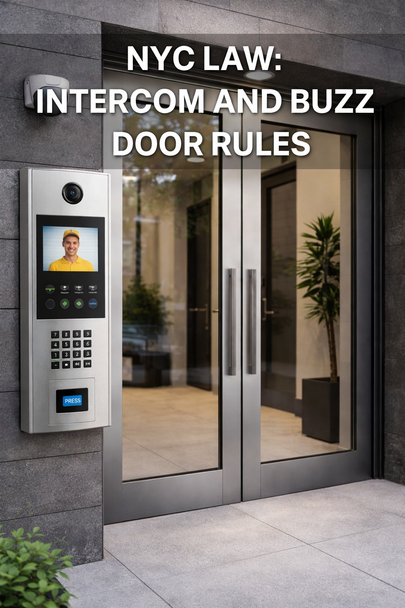
- SKU:
- NYC LAW: INTERCOM AND BUZZ DOOR RULES (NY Multiple Dwelling Law §50-a, pdf file)
- MPN:
- window guards nyc


Description
NYC LAW: INTERCOM AND BUZZ DOOR RULES
This guide provides a clear, code-based breakdown of New York City intercom and buzzer (door release) requirements for residential buildings.
For more information about the law and installation ask proffesional in the industry LIFE SPOT FIRE ***
1. WHEN IS AN INTERCOM REQUIRED?
In New York City, an intercom system is generally required in multiple dwellings that meet certain legal conditions.
- Class A residential buildings (permanent occupancy)
- Buildings with 8 or more apartments
- Applies to many buildings built or converted after 1968
- Some older buildings may also be required to install systems under retrofit rules
2. REQUIRED SYSTEM FUNCTIONS
The intercom system must allow tenants to communicate with visitors and unlock the entrance door from inside their apartment.
Required capabilities:
- Two-way communication (voice minimum)
- Door release (“buzz-in”) capability
- Connection between building entrance and apartment unit
3. WHAT QUALIFIES AS A LEGAL INTERCOM?
New York City allows different system types as long as required functions are met:
- Traditional buzzer system
- Audio intercom
- Video intercom
- Smart intercom systems (if accessible to all tenants)
Note: A building may be in violation if no working system is provided where required.
4. ENTRANCE DOOR REQUIREMENTS
The intercom system must be connected to a properly functioning building entrance door.
Requirements:
- Self-closing door
- Self-locking door
- Door must integrate with the intercom system
5. INSTALLATION GUIDELINES
Typical NYC placement standards include:
- Call buttons: maximum height of 6 feet
- Speaker/intercom panel: approximately 4 to 5 feet from floor
- Must be accessible to occupants
6. MAINTENANCE REQUIREMENTS
The intercom system is considered an essential service and must be maintained in working condition at all times.
- Must function properly at all times
- Failure to maintain can result in violations
- May be considered a breach of habitability if not working
7. SMART / PHONE-BASED SYSTEMS
Modern intercom systems are allowed if they meet legal requirements:
- Must provide communication and door release
- Must be accessible to all tenants (not smartphone-only)
8. COMMON NYC VIOLATIONS
Common issues that lead to violations include:
- Intercom not working
- No connection to apartments
- Entrance door not self-locking
- System missing in required building
- System not accessible to all tenants
PRACTICAL COMPLIANCE SUMMARY
Minimum legal setup:
- Intercom panel at building entrance
- Communication device or system for each apartment
- Door release functionality
- Self-closing and self-locking entrance door
IMPORTANT NOTE
Intercom systems in NYC are not optional amenities. They are part of building safety, security, and habitability requirements and are enforced through inspections.
-----------------
- Automatic Locks & Doors: All entrances from the street, passageway, court, yard, or cellar must have self-closing and self-locking doors.
- Intercom System: Buildings with 8+ apartments must have an "intercommunication system" connecting each apartment to the main entrance.
- Locking Time: These doors must be kept locked at all times, unless a security attendant is on duty.
- Roof Entrances: Doors from the roof must be self-closing but not self-locking, allowing for emergency egress, and must have interior safety locks (no keys).
- Tenant Access: Owners must provide tenants with keys/fobs to access the building
Third-Party Disclaimer ***
Any links to third-party websites are provided solely as a convenience and for informational purposes. We are not affiliated with, endorsed by, sponsored by, or in any way officially connected with any third-party company, website, or service referenced. We receive no compensation, referral fees, commissions, or any other form of remuneration or incentive from such third parties.
We do not control, review, or monitor third-party content and make no representations or warranties of any kind, express or implied, regarding the accuracy, completeness, legality, reliability, or suitability of any information, products, or services offered by third parties. All such content, products, and services are provided solely by the respective third parties.
Your access to and use of any third-party website is entirely at your own risk. To the fullest extent permitted by applicable law, we expressly disclaim any and all liability, whether direct, indirect, incidental, consequential, or otherwise, arising out of or related to your access to, use of, or reliance on any third-party websites, content, products, or services.
DISCLAIMER to comply with the New York City Consumer Protection Law which applies to all businesses operating in New York City: We are small family-owned and family-operated Brooklyn-based business. We are not a City of New York store nor are the website, products or services affiliated with the City of New York or any agency of the City of New York. We ourselves, our business, websites, products, services, or any hyperlinks from its website are not sponsored by, approved by, affiliated with, endorsed by, or connected to the City of New York or any agency of the City of New York, including but not limited to HPD, DOB, DOT, DSNY, FDNY and federal directly or by implication.
DISCLAIMER These codes may not be the most recent version. The State / federal or other regulation department may have more current or accurate information. We make no warranties or guarantees about the accuracy, completeness, or adequacy of the information contained on this site or the information linked to on the state site. Please check official sources.
The requirements for sign content are determined by intended use and by applicable regulation. The BUYER is responsible for determining the appropriate content for a sign or package of signs. WE makes no warranty or representation of suitability of a sign for any specific application. IT IS THE CUSTOMER'S RESPONSIBILITY TO ENSURE THAT THE SIGNS THE CUSTOMER ORDERS ARE IN COMPLIANCE WITH ALL STATE, FEDERAL, LOCAL, AND MUNICIPAL LAWS. Please review terms and conditions prior to purchase.
For more information about what is required, see the laws that are referenced and the rules applicable to your city and state. This page is for informational purposes only and is not intended as legal advice, professional advice or a statement of law. You may wish to consult with an attorney.
Related Products


Self closing door NYC law FLYER (pdf file)
hpdsigns.nyc


NYC Composting Law Flyer | DSNY Mandatory Composting Rules (pdf)
hpdsigns.nyc


2024 WINDOWS GUARDS NYC LAW (PDF)
HPDSIGNS.COM